If a radiator is warm at the bottom and cold at the top, air is trapped inside. Bleeding it lets the air out so hot water can fill the whole radiator.
You’ll need
- A radiator key (from any hardware shop, or a flat screwdriver for some valves)
- A cloth or small container
Step by step
- Turn the heating off and let the radiators cool. Hot water can spray out.
- Find the bleed valve at the top corner of the radiator, a small square or slotted fitting.
- Hold the cloth under it and turn the key anticlockwise, a quarter to half a turn. You’ll hear hissing as air escapes.
- Close it as soon as water appears.
- Repeat on any other cold-topped radiators. Start downstairs, furthest from the boiler, and work towards it, then do upstairs.
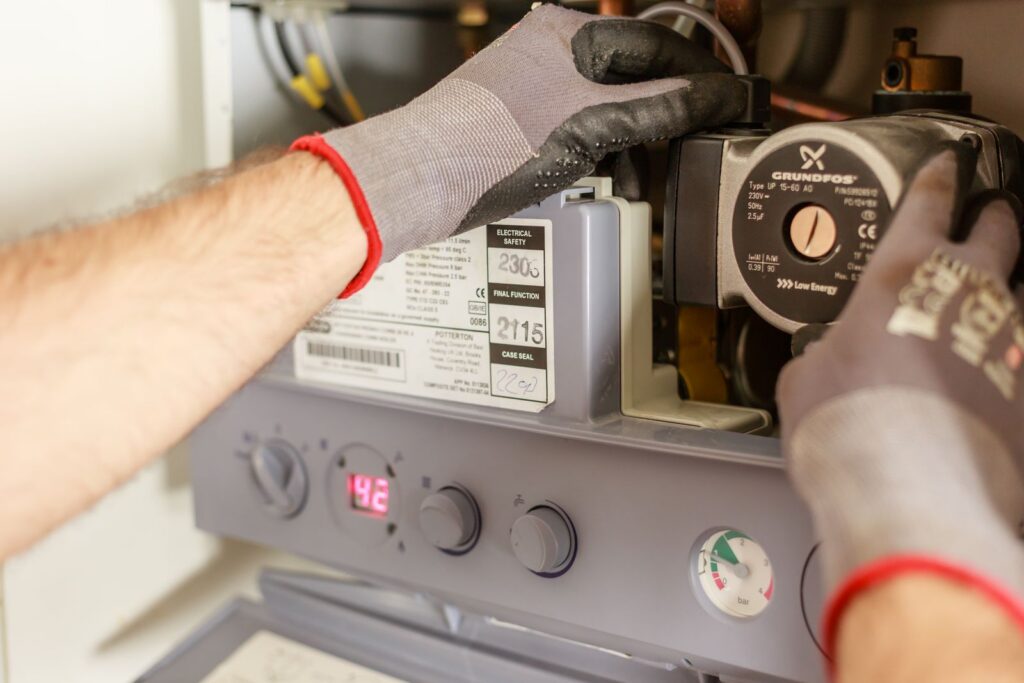
- Check the boiler pressure. Bleeding releases water, so the pressure may drop. Top it up to about 1.2 bar if needed.
If it doesn’t help
- Cold at the bottom or in the middle: that’s sludge, not air. See radiator cold at the bottom.
- Needs bleeding every few weeks: air is getting in, or gas is forming from corrosion. Worth getting checked.
- Whole radiator cold: check the valves at both ends are open.
This guide is general information. If you’re ever unsure, or anything involves gas, stop and call a Gas Safe registered engineer.