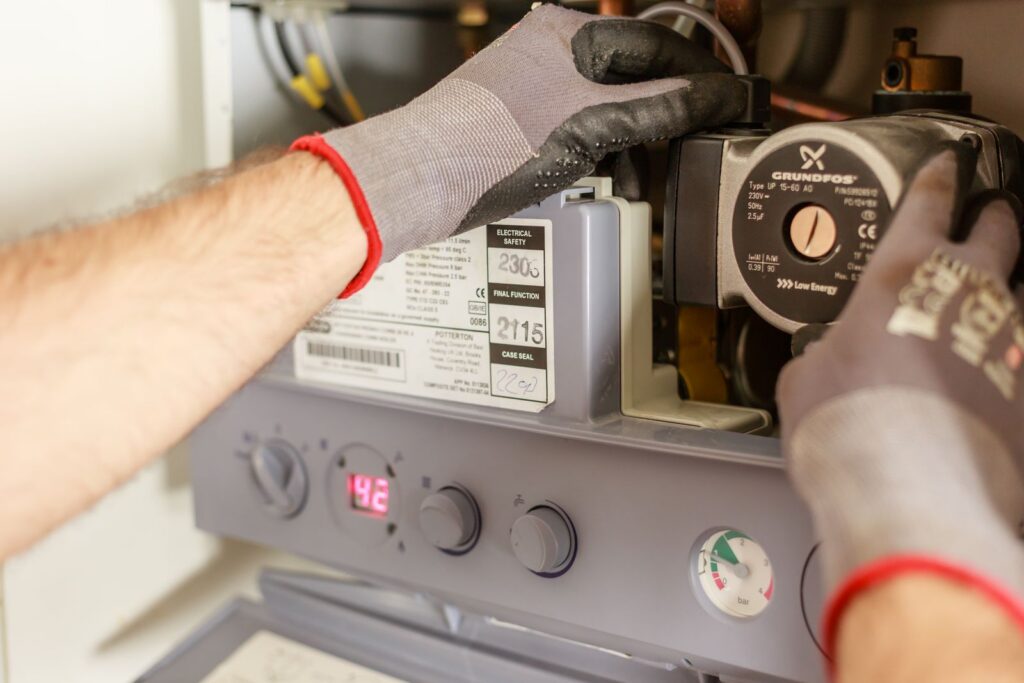
Most homes have three or four controls that all affect how warm you are and how much gas you use. Getting them working together makes a real difference.
Room thermostat
It switches the heating off when the room reaches the set temperature. Set it to the lowest temperature you’re comfortable at, often around 18 to 21°C, and leave it. Turning it up higher doesn’t heat the house faster.
Programmer or timer
Sets when the heating comes on. Time it to come on a little before you get up or get home, and off before you go to bed or leave.
Thermostatic radiator valves (TRVs)
The numbered heads on radiators control each room. Lower settings in rooms you don’t use, higher in the ones you do. Keep the thermostat room’s TRV fully open so the thermostat works properly.
Boiler flow temperature
The dial on a combi that sets how hot the water going to the radiators is. Condensing boilers work most efficiently when the water coming back is cool enough for them to condense, which happens at lower flow temperatures. Many homes stay comfortable with it set lower than the factory setting, though the heating may take a little longer to warm up. If you’re unsure, ask us to check at your next service.
Hot water
On a combi, the hot water temperature is a separate dial. On a system with a cylinder, the cylinder should be stored hot enough to control bacteria. Leave cylinder settings to an engineer.
This guide is general information. If you’re ever unsure, or anything involves gas, stop and call a Gas Safe registered engineer.